
While the process may seem complex, it usually centers on several consistent variables used across the real estate industry.
Homeowners often assume a property’s value is determined by a single number pulled from recent listings or a nearby sale. In reality, how home value is calculated involves a combination of data, comparisons, and professional judgment. Both human appraisers and automated valuation models analyze multiple factors to estimate a property’s value in the current market.
Understanding how these values are calculated can help homeowners interpret online estimates, prepare for appraisals, and better understand why similar homes may sell for very different prices.
Comparable Sales (Comps)
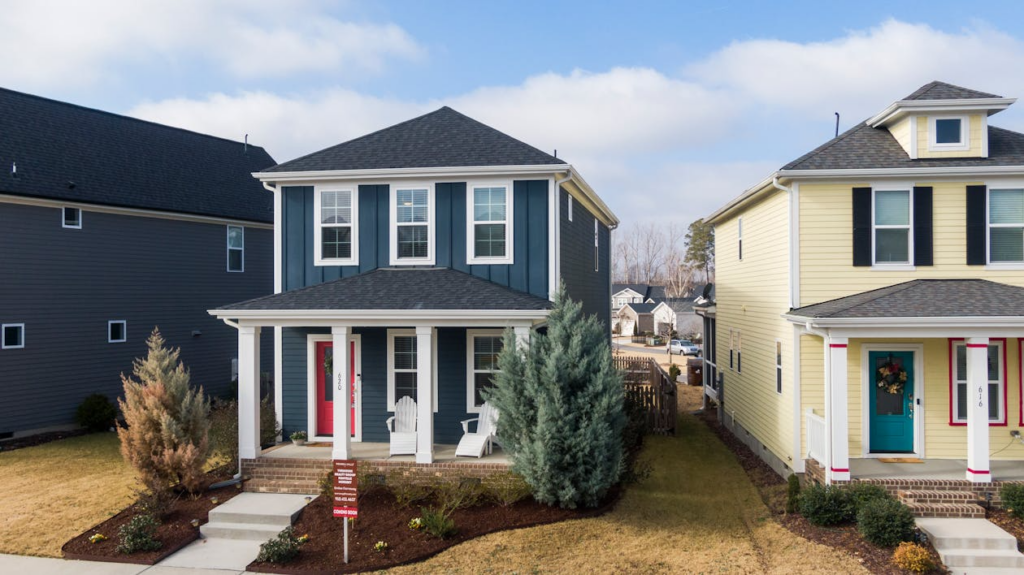
Comparable sales, commonly called “comps,” are one of the most important factors in determining home value. Comps are recently sold homes that share similar characteristics with the property being evaluated. These properties typically have similar square footage, location, age, and overall style.
Appraisers and valuation models analyze several comparable sales within the same neighborhood to determine a reasonable price range. If three nearby homes with similar features recently sold for around $400,000, that becomes a strong reference point for estimating the value of another similar property.
However, comps are rarely identical. Adjustments are made when differences exist. For example, a comparable home with a larger lot or renovated kitchen may sell for more, while one in poorer condition may sell for less. These adjustments help narrow down a realistic estimate.
Explore How Interest Rates Affect Home Prices for financing and pricing context.
Square Footage and Property Size
Size is one of the most straightforward variables used in property valuation. Larger homes generally command higher prices because they offer more living space. Real estate professionals often compare homes using a metric called price per square foot.
Price per square foot helps normalize comparisons between homes of different sizes. For instance, if homes in a neighborhood average $250 per square foot and a house has 2,000 square feet, its estimated value might fall near $500,000 before other factors are considered.
Lot size also plays a role. A property with a larger yard, more usable outdoor space, or extra acreage may be worth significantly more than a similar home on a smaller lot. In certain markets, land itself becomes a major portion of the property’s value.
See How Property Size, Lot Shape, and Layout Influence Value for insights into home value factors.
Property Condition and Upgrades
Condition strongly influences how a home is valued. Two houses with identical layouts can have dramatically different prices if one has been well-maintained while the other needs repairs.
Appraisers look for signs of deferred maintenance, such as aging roofs, outdated systems, or visible structural problems. Issues like worn flooring, outdated kitchens, or damaged exterior features can reduce a home’s estimated value because buyers will expect to invest money into repairs.
On the other hand, renovations and upgrades can increase value. Modern kitchens, updated bathrooms, new roofing, or energy-efficient improvements may justify higher prices compared to nearby older properties.
Read How Renovations Affect Appraised Value for upgrade-related pricing insight.
Location and Neighborhood Factors
Location is often considered the single most powerful driver of property value. Homes located in desirable neighborhoods typically command higher prices due to demand.
School districts, crime rates, proximity to amenities, and neighborhood reputation all influence how buyers perceive value. A home close to parks, restaurants, and transportation often attracts stronger interest than a similar property in a less convenient area.
Even within the same neighborhood, subtle location differences matter. A quiet cul-de-sac may be valued more highly than a property facing a busy road. Views, elevation, and proximity to water can also significantly influence pricing.
Learn Why Location Is Still the Most Important Real Estate Factor for added location context.
Automated Valuation Models (AVMs)
Many online real estate platforms use automated valuation models (AVMs) to estimate home prices instantly. These systems analyze massive datasets that include past sales, tax records, listing data, and neighborhood trends.
AVMs rely on algorithms that identify patterns across similar properties. By comparing thousands of data points, the model estimates a property’s value. While these systems can be useful for quick reference, they cannot fully account for unique property features or current conditions.
This is why online estimates sometimes differ from professional appraisals. AVMs work best when they have access to large amounts of recent data, but they may struggle with unusual homes, rapidly changing markets, or properties with major upgrades.
The Final Value Is an Informed Estimate
Ultimately, home value is not an exact science. It is an informed estimate based on available data and market behavior.
Professional appraisers combine comparable sales, property characteristics, and local market conditions to determine a realistic price range. Automated tools attempt to replicate this process using algorithms and large datasets.
Both methods aim to answer the same question: what would a typical buyer likely pay for this home in today’s market? By understanding the factors involved, homeowners can better interpret valuations and make more informed decisions about buying, selling, or refinancing.